African Experts Call for Domestic Financing to Secure the Continent’s Water Future
Loading your experience...
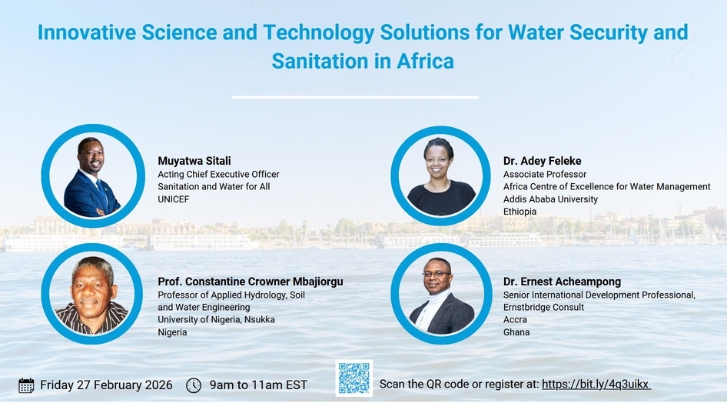
Researchers, development partners and water sector experts from across Africa convened for a high-level policy dialogue on science, technology and financing solutions for water security and sanitation, with speakers stressing that the continent must increasingly finance its own water future.
The session, co-organized by the African Capacity Building Foundation (ACBF) and the U.N. Office of the Special Adviser on Africa (UN-OSAA) on Feb. 27, 2026, examined how governments can scale innovation while building the institutions and financing systems needed to sustain it. The webinar was held in partnership with the African Technology Policy Studies Network (ATPS), the Advocates Coalition for Development and Environment (ACODE), and the Cellule d’Analyse de Politiques Economiques du CIRES (CAPEC).
The dialogue came as African governments and development institutions intensify efforts around the African Union’s 2026 theme, “Assuring Sustainable Water Availability and Safe Sanitation Systems to Achieve the Goals of Agenda 2063,” and Sustainable Development Goal 6 on clean water and sanitation.
Barassou Diawara, ACBF’s senior knowledge management expert and coordinator of the Africa Think Tank Network, who moderated the session, said it formed part of broader efforts to strengthen evidence-based policymaking and connect African think tanks to continental and global development processes.
According to figures cited during the discussion, nearly 411 million Africans still lack access to safely managed drinking water, while more than 700 million lack safely managed sanitation services. Participants also cited an annual water investment gap of between US$30 billion and US$50 billion.
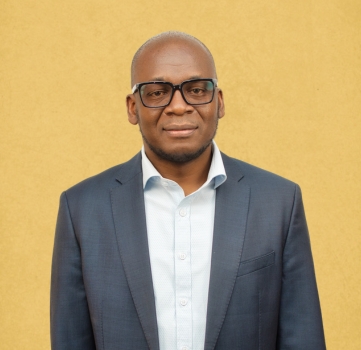
Muyatwa Sitali, acting CEO of Sanitation and Water for All, argued that shrinking aid flows and rising debt burdens make domestic financing strategies increasingly urgent.
Strong public policy and financing discipline remain essential to mobilize the scale of resources required, Sitali said, especially at this time with huge debt problems as well as the diminishing aid environment.
Muyatwa Sitali

He said governments must stop treating water and sanitation as social expenditures and instead recognize them as long-term investments tied directly to economic productivity, public health and climate resilience.
Juliet Wasswa-Mugambwa, Senior Program and Management Officer at the U.N. Office of the Special Adviser on Africa, linked the discussion to a wider continental agenda that will continue throughout the year during regional and global development forums.
She urged governments to prioritize innovation, financing, and human capital while ensuring women and young people remain central to water policy discussions. Wasswa-Mugambwa also pointed to the role artificial intelligence and machine learning could play in improving water management systems.
The discussion highlighted several financing approaches already operating across Africa.
Kenya and South Africa were cited as examples of domestic capital market mobilization in the water sector. Kenya’s water sector trust fund allows utilities to access credit through structural guarantees, while South African municipalities are using catalytic financing instruments to attract private investment into water infrastructure.
Rwanda’s national utility group was highlighted for financing solar-powered water kiosks and small pipe schemes in underserved communities through reimbursable grants and resource-based financing systems.
Senegal was presented as another example, using a tariff cross-subsidy system that protects low-income households while maintaining the financial viability of infrastructure. Under the arrangement, public institutions retain ownership of infrastructure while private operators help finance service delivery.
At the regional level, speakers pointed to the West African Development Bank (BOAD)’s efforts to pool water financing under the Economic Community of West African States (ECOWAS) frameworks to support transmission and network projects across member states.
Diawara drew a direct lesson from the models that emerged during the discussion.
If a country is struggling with financing or needs a more innovative public-private partnership model, it could just look to Senegal as an example, he said. Solutions are really within the continent.
Barassou Diawara
Several participants argued that financing challenges stem from institutional weakness. Across much of Africa, water utilities remain heavily dependent on government transfers, carry significant debt burdens and often lack the financial reporting systems required to attract institutional investors.
International Development Professional, from Ernstbridge Consult, Ernest Acheampong said procurement systems remain part of the problem because many governments continue to prioritize the lowest upfront costs when purchasing technology or infrastructure. That approach, he argued, often excludes technologies that cost more initially but generate greater savings over time.
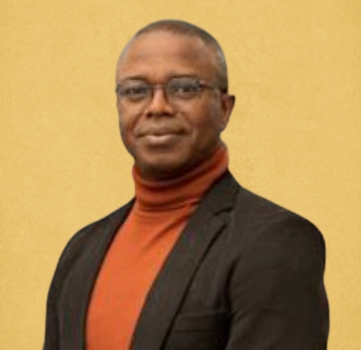
Acheampong pointed to reforms underway in Kenya and South Africa, including build-operate-transfer arrangements and metering-as-a-service systems that shift some financial risk to private-sector operators.
Nigeria’s InfraCredit facility was also discussed as a possible model for wider replication. The mechanism provides local currency guarantees that allow pension funds and insurance companies to invest in long-term infrastructure projects.
A lot of our pension funds are stuck somewhere or are being invested in things that are not yielding profit. If you build institutions within government that are creditworthy and can provide financial guarantee in the long term, it becomes easier to attract investment.
Enerst Acheampong
The webinar also examined how technology could improve water management across the continent.
Constantine Crowner Mbajiorgu of the University of Nigeria highlighted geospatial water management platforms already being used in parts of Southern Africa to support strategic planning and crop-water management.
Mbajiorgu said future infrastructure projects must integrate both historical climate data and projected climate conditions if countries hope to build resilience against droughts and floods.
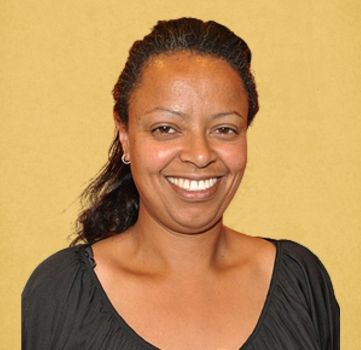
Adey Feleke, Associate Professor at the African Center of Excellence for Water Management at Addis Ababa University, argued that technology works best when integrated with local knowledge and community participation.
We bring technology. We bring innovations, she said. But we synchronize that technology and innovation with community knowledge. That makes it context driven.
Adey Feleke
Participants also discussed solar-powered pumping systems, smart metering and digital monitoring tools designed to reduce non-revenue water losses, which in some African countries account for up to half of treated water supplies.
Sitali cautioned that technology alone cannot solve the continent’s water challenges. He said some countries introduced mobile-based monitoring systems without ensuring communities had the infrastructure or financing needed to sustain them.
A very good idea became unsustainable because the financing and the infrastructure behind it had not been put in place,
Muyatwa Sitali
Alban Ahoure, director of the CIRES Economic Policy Analysis Unit (CAPEC) and professor of economics at Université Félix Houphouët-Boigny in Côte d’Ivoire, framed water access as both an economic and geopolitical issue.
He said inadequate water infrastructure already costs sub-Saharan African economies an estimated 5% of GDP annually and warned that competition over water resources could intensify in the coming decades.
“How can we guarantee universal access to safe drinking water and sanitation in the context of climatic and demographic pressure?”
Alban Ahoure
He argued that science, technology, and innovation can help address these pressures but said progress requires supportive policies, adequate financing, and strong institutional cooperation.
Africa’s water financing challenge does not sit apart from its continental policy architecture. The Africa Water Vision 2063, adopted as a common continental position, provides the framework for designing national financing strategies.
Countries that align their water policies with that vision gain the credibility to access African Development Bank financing and other continental instruments at a scale that bilateral arrangements cannot replicate.
The African Development Bank has placed water security at the center of its Ten-Year Strategy for 2024 to 2033 and invests approximately US$2.8 billion annually in water-related resilience projects. The Bank also hosts and manages the African Water Facility, which has financed 138 water and sanitation projects across the continent.
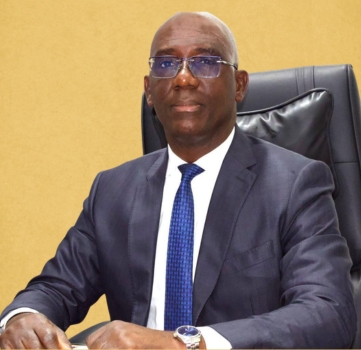
Acheampong put the question directly to finance ministries and heads of state. “Countries have water policies right now,” he said. “The question is whether those policies are aligned with the current vision of Agenda 2063.”
Watch the full Webinar here:
