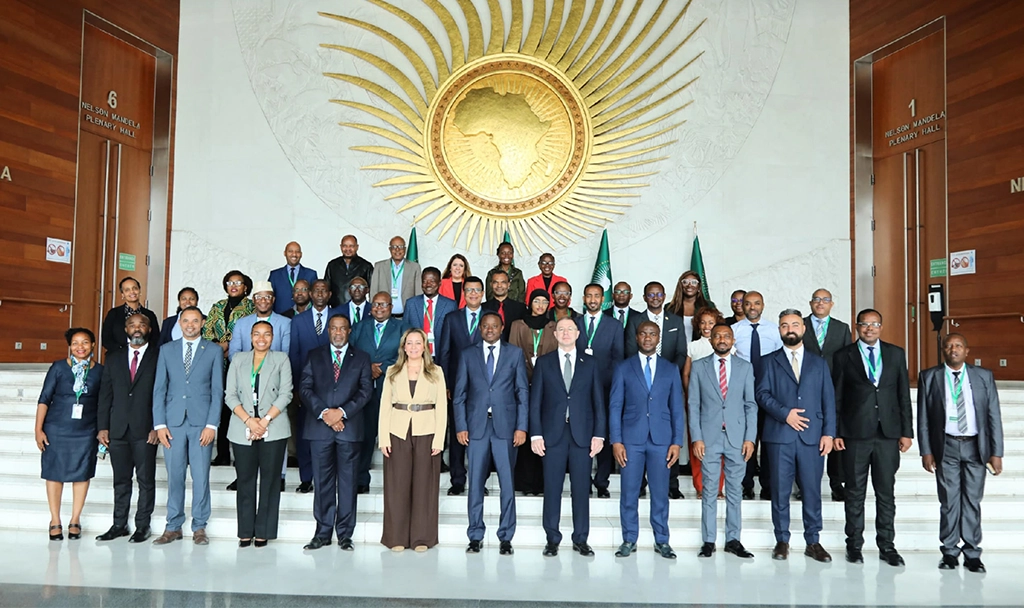
The African Capacity Building Foundation (ACBF) and the African Union Commission (AUC) conducted a high-level training seminar on the African Carbon Market. Hosted at the African Union Headquarters in Addis Ababa. This pivotal institutional initiative convened over 80 high-profile participants, including African Ambassadors, senior diplomats accredited to the AU, and key policy experts from across the continent. The event aligns with the implementation of the Africa Action Plan on Carbon Markets (AAPCM), endorsed by the AU Assembly in 2025, to provide strategic guidance for the continent’s effective participation in carbon markets.
This high-level training session comes at a critical juncture following major international climate milestones, notably the landmark decisions adopted under Article 6 of the Paris Agreement at COP29 in Baku, which are projected to unlock up to US$1 trillion annually in global climate finance by 2050.
Speaking during the opening session, H.E. Moses Vilakati, African Union Commissioner for Agriculture, Rural Development, Blue Economy and Sustainable Environment, emphasized the importance of ensuring that Africa’s engagement in carbon markets is guided by strong governance principles and continental frameworks.
Our collective approach must continue to be guided by our continental frameworks. These frameworks require us to safeguard ecosystem integrity, ensure genuine Free, Prior and Informed Consent (FPIC), and guarantee transparent and equitable benefit sharing mechanisms that support indigenous peoples and local communities
H.E. Moses Vilakati
African Union Commissioner for Agriculture, Rural Development, Blue Economy and Sustainable Environment
He further highlighted that effective oversight, transparency, and accountability are essential to ensure that carbon markets deliver meaningful benefits for African countries while supporting global climate goals.
Recognizing that carbon markets have shifted from a niche environmental mechanism to a cornerstone of geopolitical and economic strategy, the training focused on equipping Africa’s primary diplomatic emissaries with the technical, policy, and strategic insights needed to navigate and champion these complex frameworks.
Climate finance is becoming increasingly central to Africa’s development agenda, and capacity development must remain at the heart of our response. When Africa has the right capacities, Africa can better shape its own future.
Ambassador Laho Bangoura
Special Adviser to the Executive Secretary and Head of the AU Liaison Office at the African Capacity Building Foundation (ACBF)
Throughout the seminar, participants examined key aspects of carbon markets, including the distinction between compliance and voluntary carbon markets, international regulatory frameworks, opportunities for African countries, and lessons from successful African-led carbon initiatives. Discussions also focused on strengthening safeguards, ensuring transparency, protecting community
rights, and promoting equitable benefit-sharing from carbon market revenues to support climate resilience and local development.
The seminar also explored opportunities arising from increased global demand for high-integrity carbon credits and the importance of strengthening Africa’s institutional, technical, and diplomatic capacities to ensure that the continent actively participates in shaping the future of carbon markets.
By strengthening the knowledge and capacity of Africa’s diplomatic representatives, the African Capacity Building Foundation, the African Union Commission, and their partners are contributing to a coordinated continental approach that promotes environmental integrity, supports climate finance mobilisation, and advances Africa’s sustainable development objectives.
As the Presidency of COP29, Azerbaijan consistently sought to ensure that the voices and priorities of climate-vulnerable countries remained at the center of the global climate agenda.
H.E. Ruslan Nasibov
Ambassador of the Republic of Azerbaijan.
The Government of Azerbaijan supported the training through the Azerbaijan International Development Agency (AIDA), reaffirming its commitment to strengthening international cooperation on climate action and sustainable development.
About the African Capacity Building Foundation (ACBF)
The African Capacity Building Foundation (ACBF) is the leading institution for capacity development on the African continent. As a Specialized Agency of the African Union, ACBF enables transformative human and institutional development by designing and implementing impactful programs across Africa. Guided by the vision of an Africa that is stronger, self-reliant, and globally competitive by 2063, ACBF contributes to building economic resilience, advancing sustainable trade, strengthening food sovereignty, and promoting effective governance. With more than 33 years of experience and a continent-wide mandate, ACBF equips African institutions and leaders with the skills, knowledge and tools needed to drive inclusive and sustainable development.
About the African Union Commission (AUC)
The African Union Commission (AUC) serves as the secretariat of the African Union and supports Member States in advancing continental priorities under Agenda 2063. Through the Department of Agriculture, Rural Development, Blue Economy and Sustainable Environment (ARBE), and its Directorate of Sustainable Environment, the AUC supports the implementation of the African Union Climate Change and Resilient Development Strategy and Action Plan. The Directorate contributes to strengthening Africa’s climate governance frameworks, supporting access to climate finance, and promoting sustainable approaches to carbon markets that protect ecosystems, communities, and development priorities.
About the Azerbaijan International Development Agency (AIDA)
Established in 2011, the Azerbaijan International Development Agency (AIDA) operates under the Ministry of Foreign Affairs of the Republic of Azerbaijan and provides development and humanitarian assistance aimed at supporting international cooperation and sustainable development. Through its engagement in climate-related initiatives, AIDA contributes to strengthening partnerships and supporting climate resilience efforts in developing countries.
For more information or media inquiries, please contact:
Fatou Diouf
Head of Communications & Influencing
African Capacity Building Foundation
Communications Unit Email: comms@theacbf.org
Website: www.theacbf.org