
Renforcer la résilience et favoriser des économies productives
La trajectoire de développement de l'Afrique est de plus en plus façonnée par les risques climatiques et l'accès à l'énergie. La hausse des températures, l'évolution des régimes de précipitations et les phénomènes météorologiques extrêmes affectent les moyens de subsistance, les systèmes alimentaires et la stabilité économique.
L'accès limité à une énergie fiable et abordable freine la productivité dans les secteurs de l'agriculture, de l'industrie et des petites entreprises. Ces pressions témoignent de lacunes structurelles qui nuisent aux résultats de développement dans l'ensemble des secteurs.
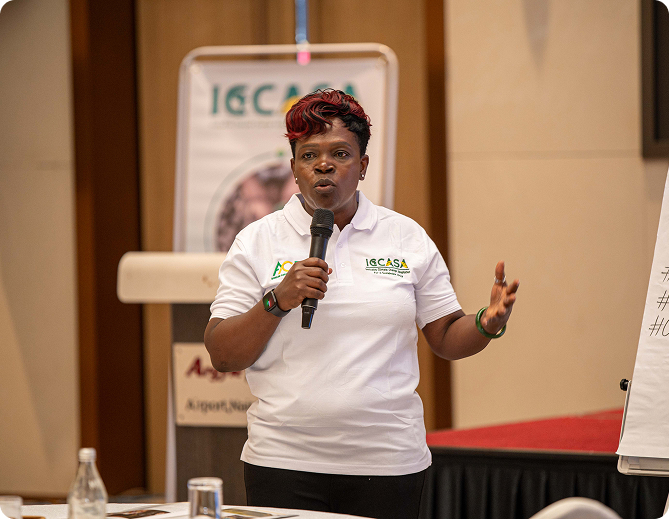
L'ACBF relève ce défi grâce à un renforcement ciblé des capacités qui permet aux pays et aux institutions de concevoir, de financer et de mettre en œuvre des solutions d'adaptation climatique et d'énergie favorisant des utilisations productives.
Ce travail contribue directement à l'ODD 7 sur l'énergie propre et d'un coût abordable, à l'ODD 13 sur la lutte contre les changements climatiques, et à la vision de l'Agenda 2063 pour des économies résilientes et durables.
Où se situe le défi
Climate and energy systems across Africa face constraints that limit performance and impact.
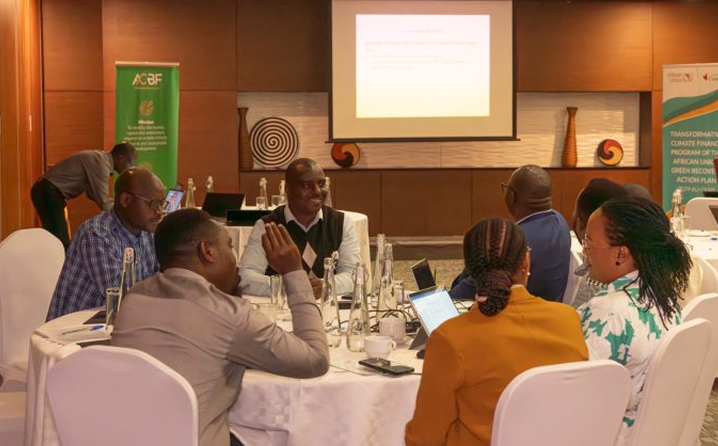
Many countries experience limited institutional capacity to access international climate finance, gaps in technical expertise, and weak coordination across sectors.
Climate adaptation efforts often remain fragmented, while energy systems require stronger governance and regulatory frameworks to support reliable and sustainable access.
These constraints affect productive sectors directly.
Climate variability disrupts agriculture, water systems, and livelihoods. Limited access to energy for productive use restricts value addition, enterprise growth, and local economic development.
These interconnected challenges require coordinated and capacity-driven responses to address them effectively.
What We Do Differently
ACBF strengthens institutional capacity to translate climate priorities into practical and scalable solutions. This approach enables countries and institutions to move from fragmented interventions to coordinated and scalable solutions. Building technical expertise in climate-resilient development, regulatory governance, and energy systems Promoting knowledge exchange and coordination across institutions and sectors. We focus on:
Developing institutional capacity
To design and implement climate adaptation strategies and energy policies
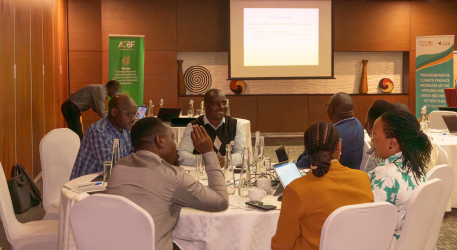
Supporting the preparation of bankable climate adaptation projects
To improve access to international climate finance
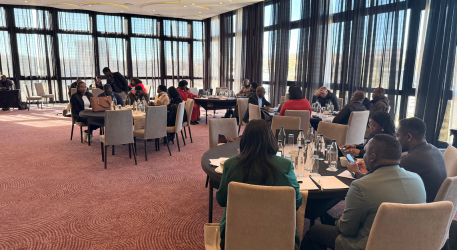
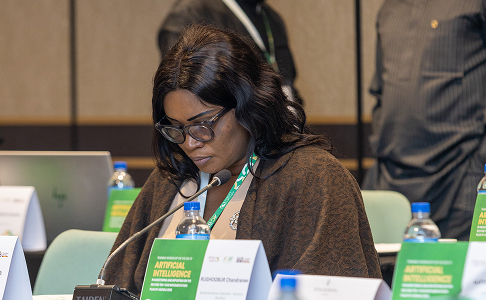
Building technical expertise
In climate-resilient development, regulatory governance, and energy systems
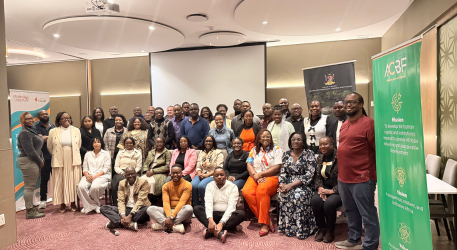
Promoting knowledge exchange and coordination across institutions and sectors
How We Work: A Systems Active Approach
ACBF delivers this work through complementary programs that strengthen institutional capacity, leadership, and knowledge systems. Key initiatives include:
Impact in Numbers
Across Africa, the program is delivering measurable results:
Stakeholders engaged through conferences, policy dialogues, and knowledge platforms
Professionals trained in energy regulation and climate policy
Policymakers trained across Senegal, Côte d’Ivoire, Namibia, Lesotho, and Rwanda to advance inclusive climate and energy policies
Country-level impact includes:
Ghana and Kenya
Benin, Ethiopia, Kenya, and the Republic of the Congo
Beyond institutional support, ACBF is also investing in system-wide enablers. A 20-percentage-point increase in institutional capacity was recorded between 2022 and 2025 across Benin, Ethiopia, Kenya, and the Republic of Congo.
Beyond Climate Response: Enabling Resilient Economies
This work is about more than adaptation. It is about enabling countries to:
- Strengthen resilience across productive sectors
- Expand access to energy for economic activities
- Improve capacity to mobilize and manage climate finance
- Align climate and energy priorities with national development strategies